Introduction
A brief introduction: I’ve been experimenting with game development for several years but never managed to get very far. Mainly because the initial learning curve is quite steep, and I quickly lose motivation.
I’ve tried Unity, Unreal, and Godot, but the problem with these major engines is that you need to spend a considerable amount of time just learning how to use them—not to start creating prototypes, but simply to understand how they work. This has demotivated me every time, as you’re forced to follow lengthy tutorials that show you how the engine functions but don’t offer much fun—you’re just replicating steps. Godot beeing the engine I enjoyed the most on this list.
Homebrew
When I was younger, I often had consoles that could be modded, and I frequently came across news about homebrew projects—nostalgia for the PSP in particular! For those who don’t know, homebrew refers to small programs or games that can be run on modded consoles, bypassing the need for official licenses. What a joy it must have been to see your own program running on a real console!
Like many developers, I followed the news about the release of the Playdate and the pre-orders. I let it pass at first, but about few year ago, a friend showed me his console, and I was immediately hooked—whether it was the design, the philosophy behind it, the quality of the screen, or its adorable charm. It brings back that homebrew, indie vibe, with games built around a single gameplay idea. This little console combines multiple things that have piqued my curiosity multiple times.
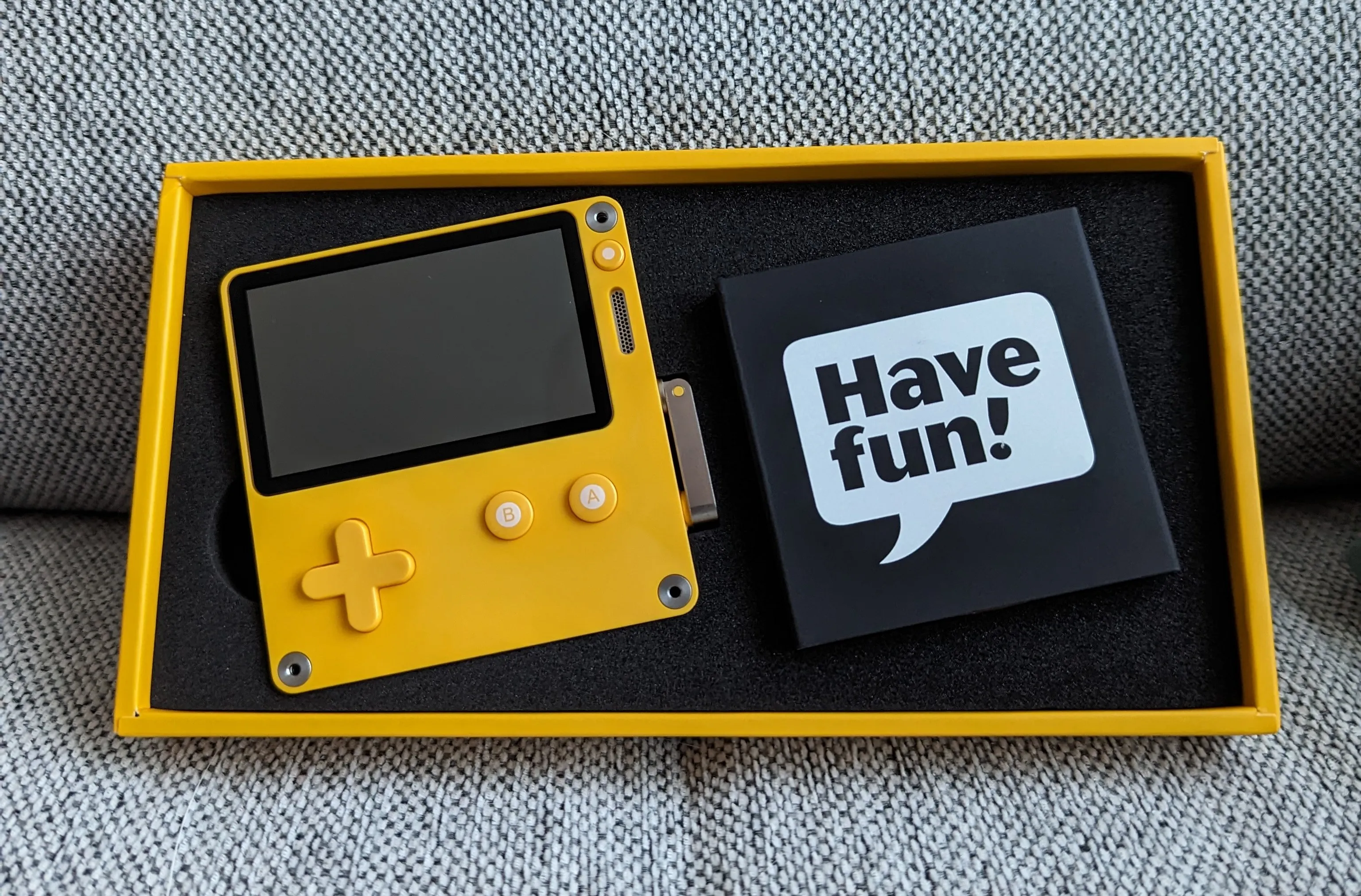
Eventually, I gave in and pre-ordered a Playdate as well. Almost 10 months later, it arrived! My goal was to step into the world of game development, without relying on a major engine, on a console with constraints, to learn the basic mechanics. When I placed my pre-order, I thought I could start exploring its development right away, so I’d be ready to play my creations as soon as the console arrived. Spoiler alert: that didn’t work out. I started developing Crong in October 2022 but put it on pause about a month later. I finally got back to it in November/December 2023.
A bit of background: I’m a front-end engineer and have been developing, both as a hobbyist and professionally, for over 15 years now. But I have a big problem, which isn’t uncommon in this field—I love starting personal projects, but finishing them… that’s another story. I imagine for many, seeing the release of a game based on the concept of Pong doesn’t mean much. But for me, it’s an incredible milestone, as well as launching this site to talk about its development!
Crong
This game has a very simple concept, familiar to everyone, which makes brainstorming around the gameplay straightforward. However, unlike a quick prototype, I wanted to test creating a full-fledged game. And even for a simple game like this, there’s a lot to do! In a prototype, you only focus on the gameplay. In a complete game, you have the launch screen, the selection menu, the game itself, transitions between screens, music, sound design, victory/defeat screens, levels, and more!
To develop Crong, I used the Playdate SDK in LUA provided by Panic, which you can find here.
You can find this game on itch.io.
Why start with a simple game?
Because even if it’s basic, it teaches you invaluable lessons about game development.
To create this game, I had to learn (not necessarily in this order):
- How to draw assets
- How to handle screen transitions
- How to animate elements
- How to process player inputs
- How to implement saving and loading for the highscore feature
- How to design basic opponent behavior
- How to integrate and play music
And that’s not all! A simple game like Pong also comes with more screens than you might expect:
- Title screen
- Menu screen
- Game screen
- Pause screen
- End game screen
This little game was a fantastic learning experience. I even created an itch.io page for it, which motivated me to keep going. It’s been downloaded by 65 people—thank you so much for the support! I even earned $2 from it, which is incredibly encouraging.
A message for aspiring game developers
I know how tempting it is to jump into ambitious projects, especially in game development. We’re all inspired by the incredible indie titles we play and dream of creating the next innovative GOTY. But learning the basics is a crucial step that lays the foundation for building something bigger in the future.
This journey has inspired me, and I’m already planning my next project. Stay tuned!
I hope you enjoyed this first article. Feel free to share your feedback with me on X or Instagram!